
PUWER Assessment: What It Covers and How to Do It Properly

A PUWER assessment is not the same as a routine machinery check. Daily pre-use checks can help spot obvious faults, but they do not, by themselves, show that equipment has been systematically assessed against the wider requirements of the Provision and Use of Work Equipment Regulations 1998 (PUWER).
For a duty holder, the useful question is not simply “Have we inspected the machine?” It is “Can we show that the machine, the way it is used and the work around it have been assessed, and that significant risks are being controlled?”
Key points:
- A PUWER assessment reviews work equipment against Regulations 4–24 of PUWER 1998. A Regulation 6 inspection is one narrower duty within that.
- It must be carried out by a competent person with knowledge of the specific machinery, not just a checklist.
- Findings should be risk-rated, evidenced and assigned to a named owner with a target date.
- There is no single legal review interval, but a significant change to the machine or its use should trigger reassessment.
What is the difference between a PUWER assessment and a PUWER inspection?
A PUWER assessment is a structured review of work equipment against the relevant requirements of PUWER 1998. It considers the equipment’s suitability, guarding, controls, maintenance, safe use and the people who operate or maintain it. The Health and Safety Executive’s (HSE) Approved Code of Practice (ACOP) L22 provides practical guidance on applying the Regulations.
A PUWER inspection has a more specific meaning. Regulation 6 requires an inspection where safety depends on correct installation, or where deterioration could create danger. Depending on the equipment and the purpose of the inspection, it may involve a visual check, testing or a more detailed examination. Required inspection records must be kept until the next inspection is recorded.
Daily operator checks are valuable, but they are generally not a substitute for either a systematic assessment or a Regulation 6 inspection where one is required. Nor does a LOLER examination, where the Lifting Operations and Lifting Equipment Regulations apply, automatically cover every PUWER duty.
Who should carry out the assessment?
PUWER requires relevant inspections to be carried out by a competent person. ACOP L22 describes competence in terms of having the necessary knowledge, experience and ability for the particular task. In practice, an assessor needs to understand the machinery, how it is used and maintained, and how to recognise hazards at the machine, not just complete a checklist.
Competence is specific to the work. A person experienced in assessing simple work equipment may not have the skills to assess a complex automated cell or validate a safety-related control system. Training can support competence, but a certificate alone does not demonstrate that someone can assess every type of machinery.
Independence is not a universal legal requirement. However, an assessor should be able to question existing arrangements and report shortcomings clearly. Where in-house personnel designed, installed or maintain a machine, an independent review may help provide appropriate challenge, particularly for complex or high-risk equipment.
What should a PUWER assessment cover?
A suitable assessment works through the relevant requirements of Regulations 4–24, considering the equipment in its actual operating environment and how it is used, set, cleaned and maintained. The numbers below reflect the legislation; in particular, Regulations 14–18 cover different aspects of controls and control systems.
Suitability, maintenance and inspection: Regulations 4–6
- Regulation 4, suitability: Is the equipment suitable for the task, users and environment? Consider foreseeable use, access, materials processed and conditions such as heat, moisture or contamination.
- Regulation 5, maintenance: Is the equipment maintained in an efficient state, efficient working order and good repair? Are maintenance activities and safety-critical components addressed?
- Regulation 6, inspection: Is an inspection required after installation or relocation, at suitable intervals, or after exceptional circumstances? Is its scope and frequency based on risk and deterioration?
A frequency should have a reason behind it. The assessment should explain what can deteriorate, how quickly it might happen and what an inspection needs to check, not simply apply the same interval to every machine.
Use, information and safeguarding: Regulations 7–13
- Regulation 7, specific risks: Is use restricted to people designated for tasks that involve particular risks, with appropriate protective measures?
- Regulation 8, information and instructions: Do users and maintainers have the information they need about safe use, foreseeable abnormal situations and required actions?
- Regulation 9, training: Are operators, maintenance staff and supervisors adequately trained for their roles?
- Regulation 10, conformity with relevant requirements: Is there evidence that applicable product-supply requirements have been met? For relevant machinery, this may include a declaration and conformity documentation. A conformity mark alone does not establish that the machine remains safe in its current use.
- Regulation 11, dangerous parts: Are dangerous parts guarded or otherwise protected so people cannot access them, or are risks controlled by an appropriate protective device?
- Regulation 12, specified hazards: Are risks from falling or ejected items, rupture, fire, overheating, unintended discharge or explosion prevented or adequately controlled?
- Regulation 13, temperature: Are accessible hot or very cold parts and substances controlled to prevent injury?
For machinery risk reduction, EN ISO 12100 provides a framework for identifying hazards and reducing risk. Where interlocking guards are used, EN ISO 14119 is relevant to their design and selection.

Controls, isolation and safe working: Regulations 14–24
- Regulation 14, starting and changes in operating conditions: Can starting or a significant change in conditions occur safely and deliberately?
- Regulation 15, stop controls: Can the equipment be brought to a safe stop, and do stop controls take priority over start controls?
- Regulation 16, emergency stops: Where an emergency stop is appropriate, is it accessible and does it act in priority to other controls?
- Regulation 17, controls: Are controls identifiable, positioned appropriately and safe to operate?
- Regulation 18, control systems: Do control system faults or failures create additional risk? Safety-related parts may require assessment against EN ISO 13849-1, where relevant.
- Regulation 19, isolation from energy sources: Can all relevant energy sources be isolated, including stored energy, before risky maintenance or repair? Is there a defined lock out/tag out (LOTO) method where required?
- Regulation 20, stability: Is the equipment stable, including during use, movement or installation?
- Regulation 21, lighting: Is lighting adequate for safe operation, adjustment and maintenance?
- Regulation 22, maintenance operations: Can maintenance be planned and carried out safely, with appropriate isolation and access?
- Regulation 23, markings: Are necessary markings, such as load limits or direction of movement, clear and legible?
- Regulation 24, warnings: Are necessary warning devices effective, understandable and maintained?
If a light curtain or scanner is used, its position must provide a safe distance from the hazard. EN ISO 13855 addresses positioning of safeguards in relation to approach speeds. Where that distance depends on the machine’s stopping time, measurement may be needed; a visual check alone cannot establish the stop time. See our stop time testing service.
What should the written report include?
PUWER does not prescribe one universal template for a full assessment. But a report should make its scope, findings and follow-up clear enough for a manager, auditor or enforcing authority to understand what was assessed and what happened next.
A useful report normally records:
- Scope and equipment identity: asset or line identification, location, assessment date, operating context and any limitations.
- Findings against relevant requirements: what was checked, what evidence was considered and where a shortcoming was found.
- Risk and priority: a reasoned risk rating and clear explanation of the potential harm and exposure.
- Evidence: relevant photographs or test results, linked to the equipment and finding.
- Actions: practical recommendations, priority, named owner and target date, with status tracked to completion.
- Residual risk and review: any risk that remains, who accepts it and the conditions or trigger for reassessment.
A PUWER assessment template can help structure the work, but it cannot decide whether a guard is adequate, an interlock is being defeated or a safety distance is sufficient. The quality of the assessment depends on the assessor’s competence and the evidence gathered. Safemach uses a dedicated PUWER assessment system; our PUWER inspection service explains how we approach assessments and reporting.
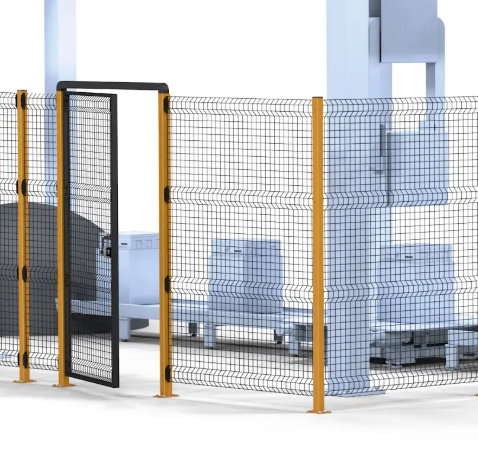
Common gaps we see on site
A common issue is that a guard was removed for maintenance or production access and never properly refitted. We also encounter interlocks that have been bypassed, or light curtains positioned too close to a hazard because the stopping time was never measured.
Other recurring gaps include inspection intervals with no recorded rationale, maintenance tasks without a defined isolation method, and older imported machinery with incomplete technical documentation. These findings need more than a tick in a box: they need a risk-based decision and, where required, an engineered solution. Learn more about machinery safety fences and CE/UKCA machinery audits.
How often should you reassess?
PUWER does not set one fixed interval for a full assessment of every machine. Review arrangements according to risk, how the equipment is used, its condition and whether its safeguards or operating context change. Set review dates for your own system, but do not treat a calendar date as a replacement for reassessment after a significant change.
Reassess when, for example:
- machinery is modified, relocated or substantially refurbished;
- there is an incident, near miss, damage or repeated fault;
- production changes alter the task, materials, speed or access;
- safeguards, controls or maintenance arrangements change; or
- an audit, inspection or operator report identifies a new concern.
Turn findings into safer machinery
A PUWER assessment should lead to decisions and completed actions, not simply a report on file. Safemach supports the process from assessment through to engineering, supply and installation of guarding and safety systems, with stop time testing to EN ISO 13855 where required. We also provide IIRSM-approved PUWER Assessor training for organisations developing in-house competence.
If you need to review an assessment or plan a machinery safety programme, speak to Safemach.